How-To
Which Angle Grinder Disc to Use for Each Material
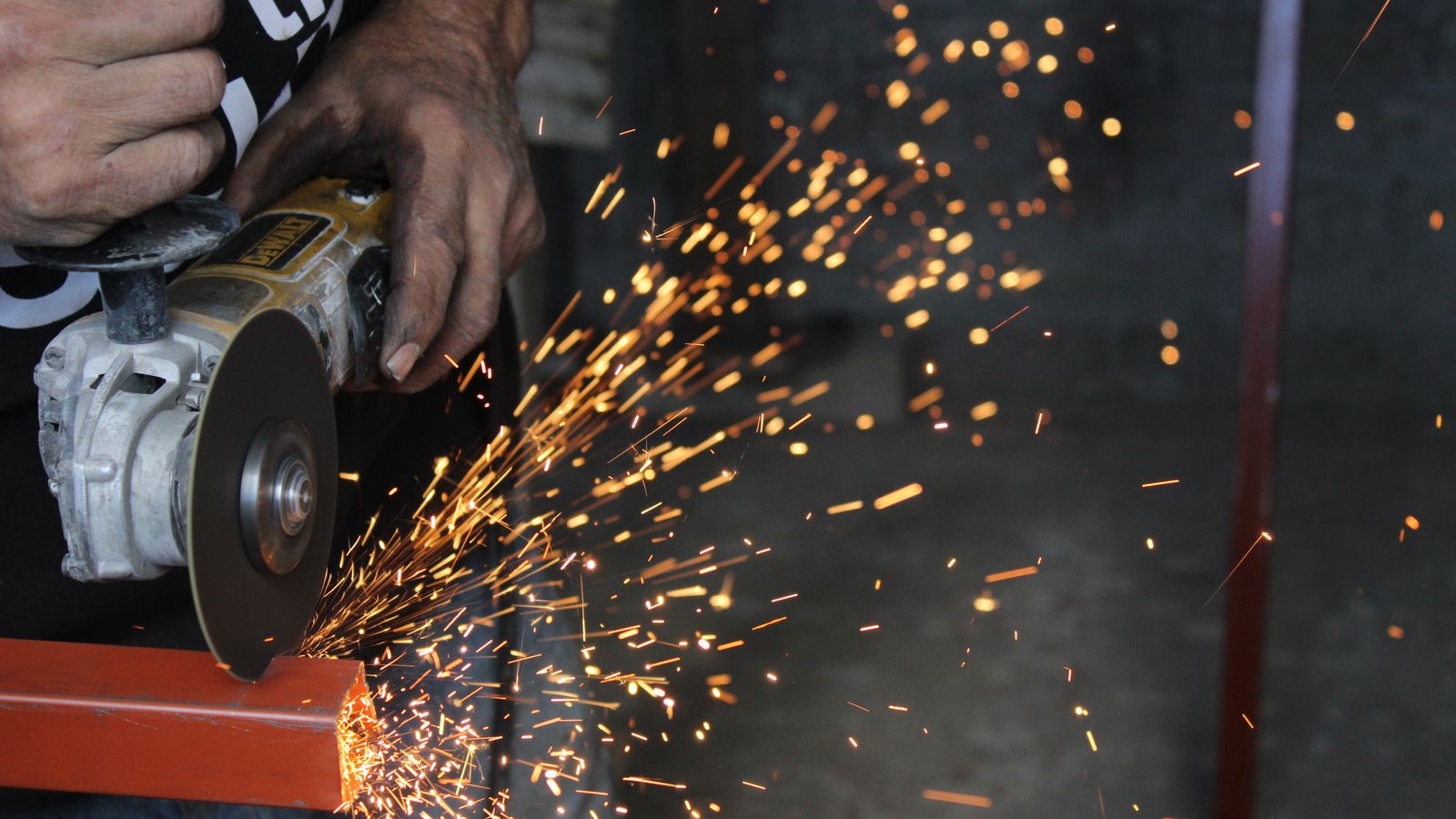
Most angle grinder accidents come down to the wrong disc on the wrong machine. Choosing which angle grinder disc for metal, tile, concrete or finishing is partly about speed and finish, but mostly about staying safe. This guide takes a Kenyan fundi through the disc types, the numbers printed on every disc, and how to spot one that should never be fitted.
In this guide
Read the Disc Before You Fit It
Every bonded disc carries printing on its label, and three numbers matter. The diameter must match what the grinder and its guard were built for. The bore, commonly 22.2 mm, must seat cleanly on the flange. The maximum speed in RPM must equal or exceed the grinder no load speed.
That last number is the one most often ignored on site, and it is the one that hurts people. A 115 mm grinder typically spins near 11,000 RPM while a 230 mm machine runs nearer 6,500 RPM. A disc rated only for the slower machine will come apart on the faster one.
Bonded discs also carry a manufacture or expiry date. The resin bond weakens with age and damp, and makers generally set a shelf life of about three years. A disc that has sat in a humid store for years should not go on a grinder.
- Diameter must match the grinder and its guard
- Bore, commonly 22.2 mm, must seat properly on the flange
- Disc maximum RPM must equal or exceed the grinder no load speed
- Check the expiry or manufacture date on bonded discs
- Tighten with the spanner supplied, not a punch
Which Angle Grinder Disc for Metal
For steel the choice is between a cutting disc and a grinding disc, and they are not interchangeable. A cutting disc is thin, often 1 to 3 mm, and slices through bar, angle iron and sheet using its edge only. A grinding disc is thicker and shapes with its face, dressing welds and taking off rust.
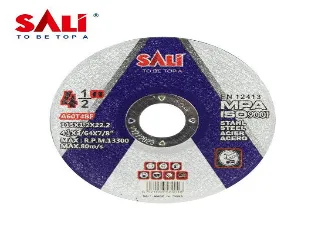
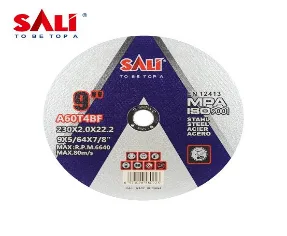
Using a cutting disc for grinding is dangerous. Pressing the face of a thin disc against the work puts side load on it, and thin discs have little strength sideways. A 4.5 inch Metal Cutting Disc (SALI) belongs in straight cuts, while a 9 inch Metal Cutting Disc (SALI) suits thick plate.
Match the abrasive to the metal too. A disc made for mild steel clogs on aluminium, and a standard disc on stainless leaves iron in the surface that rusts later, so use one marked inox. Let the disc cut at its own pace; forcing it makes it hotter, not faster.
- Cutting disc: thin, straight cuts, edge only
- Grinding disc: thick, for welds and rust, face only
- Never grind with a cutting disc or cut with a grinding disc
- Use an inox rated disc on stainless steel
- Keep the cut straight; twisting the disc causes kickback
Cutting Disc Sizes: 4.5 Inch vs 9 Inch
Kenyan workshops mainly run 100 mm, 115 mm and 230 mm discs, known as 4 inch, 4.5 inch and 9 inch. The machine decides the disc size, never the other way round. You cannot fit a disc bigger than the guard allows, and removing the guard to make one fit is how people lose fingers and eyes.
A 115 mm disc reaches roughly 25 to 30 mm into the work, which covers most bar, box section and sheet. A 230 mm disc cuts deeper and suits thick plate and paving, but it is heavy and stores far more energy, so a jam is more violent. Never fit a worn 230 mm disc to a small grinder, which would spin it past its rated speed.
Diamond Discs for Tile, Stone and Concrete
Diamond discs do not wear away like bonded abrasives. They are steel blanks with diamond grit bonded to the rim, and they grind their way through masonry. They suit tile, natural stone, concrete block, paving and cast concrete, and should never be used on steel.
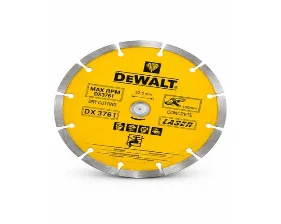
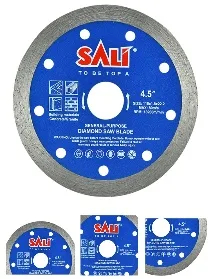
Wet and dry types are different tools. A dry segmented disc has gullets that let air cool the blade, and it is used in short passes with the blade lifted clear every few seconds, which is how a Diamond Cutting Disk 4 inch Dry (SALI) works. A continuous rim disc such as a Dewalt Wet Diamond Disc 4.5 inch needs water, which cools it and leaves a chip free edge on tile.
Water and a 240V 50Hz mains grinder are a dangerous mix. If you must cut wet by hand, feed water as a trickle rather than flooding the work, keep the cable and plug clear, and use an RCD protected socket. Dry cutting concrete throws silica dust that permanently damages lungs, so wear a dust mask.
Flap Disc Use for Finishing
A flap disc is overlapping strips of coated abrasive on a backing plate. It cuts more gently than a grinding disc and leaves a far better surface, so it is the disc for blending welds, cleaning gates and grills before painting, and stripping rust from steel that will be coated.
Work at a shallow angle, roughly 5 to 15 degrees, and let the abrasive do the job. Held flat it clogs; held too steep it digs in. Grit numbers work like sandpaper, with 40 or 60 cutting fast and 80 or 120 finishing. Replace one once the flaps are worn near the plate or run out of balance.
Wood on a Grinder: Why the Guard Stays On
Carving and chainsaw type wheels for timber are among the most dangerous accessories sold for angle grinders. They have no depth control and no chain brake, the teeth grab the grain, and the machine is thrown back at you. Never fit an angle grinder blade for wood to a machine without a guard.
For cutting timber, use a circular saw or a jigsaw. A grinder spins far faster than any saw designed for wood and has nothing to stop a kickback. Whatever disc you fit, the guard stays on: it stands between you and the fragments when a disc lets go.
Spotting a Worn or Cracked Disc
Inspect every disc before it goes on the machine. Look at both faces for hairline cracks running from the bore or rim, for chips, and for a label that has bubbled or lifted, which means damp got in. Discard any disc dropped on a concrete floor, because the damage may not show.
The ring test settles it on a bonded disc. Hang it loosely on a finger through the bore, tap the edge with a screwdriver handle and listen. A sound disc rings; a cracked or damp one gives a dull thud. On a diamond blade, check the segments and steel body instead.
After fitting a disc, run the grinder with no load for half a minute, standing out of its line with nobody in front. Store discs flat and dry, not loose in a bag with spanners. On sites with no socket, or when the power is out, battery grinders are common, and every rule above still applies.
- Check both faces for cracks, chips and lifted labels
- Ring test bonded discs; a dull sound means bin it
- Run a new disc up for 30 seconds clear of people
- Wear a face shield, ear defenders and dust mask
- Keep the cable behind you and out of the cut line
Tools mentioned in this guide
Prices change with stock and supplier costs, so we quote on WhatsApp. Send us the tool and your town for today's price and availability.
Frequently asked questions
What is the difference between a cutting disc and a grinding disc?
A cutting disc is thin and slices through steel with its edge in a straight pass. A grinding disc is thicker and shapes with its face, for welds, chamfers and rust. Never grind with a cutting disc, because side load on a thin disc makes it shatter.
Can I fit a 9 inch disc on a 4.5 inch angle grinder?
No. The guard will not cover it and the small machine spins far faster than the larger disc is rated for, so it can burst. The same applies to a worn down 230 mm disc. Keep each disc on the machine it was sold for.
What does the RPM number on a cutting disc mean?
It is the maximum safe speed for that disc, and it must equal or exceed the no load speed on your grinder rating plate. A 115 mm grinder typically runs near 11,000 RPM, so a disc rated only for a slower machine is unsafe.
Do I need a wet or a dry diamond disc for concrete?
Dry segmented discs suit hand grinders cutting concrete, block and paving, used in short passes so the blade cools. Wet continuous rim discs need a water feed and give a cleaner edge on tile. Dry cutting throws silica dust, so wear a proper mask.
Can I put a wood blade on my angle grinder?
It is strongly discouraged. Chainsaw type and carving wheels grab the grain and throw the machine back, and a grinder has no depth control or chain brake. Never use one without a guard. For timber, use a circular saw or jigsaw.