Safety
Eye and Hand Protection for Fundis: Goggles, Gloves and Masks
Ask any experienced fundi about injuries and the stories are the same: a grinding spark in the eye, a sliver of steel in the palm, a welding flash that kept them awake all night. None of them were doing anything unusual. They were doing ordinary work without the two cheapest pieces of protection in the shop. Eye and hand protection costs less than a day off work, and once it becomes a habit you stop noticing it. This guide explains what to wear for each kind of job, how to choose it, and how to make it stick on a busy site.
In this guide
Why eyes and hands come first
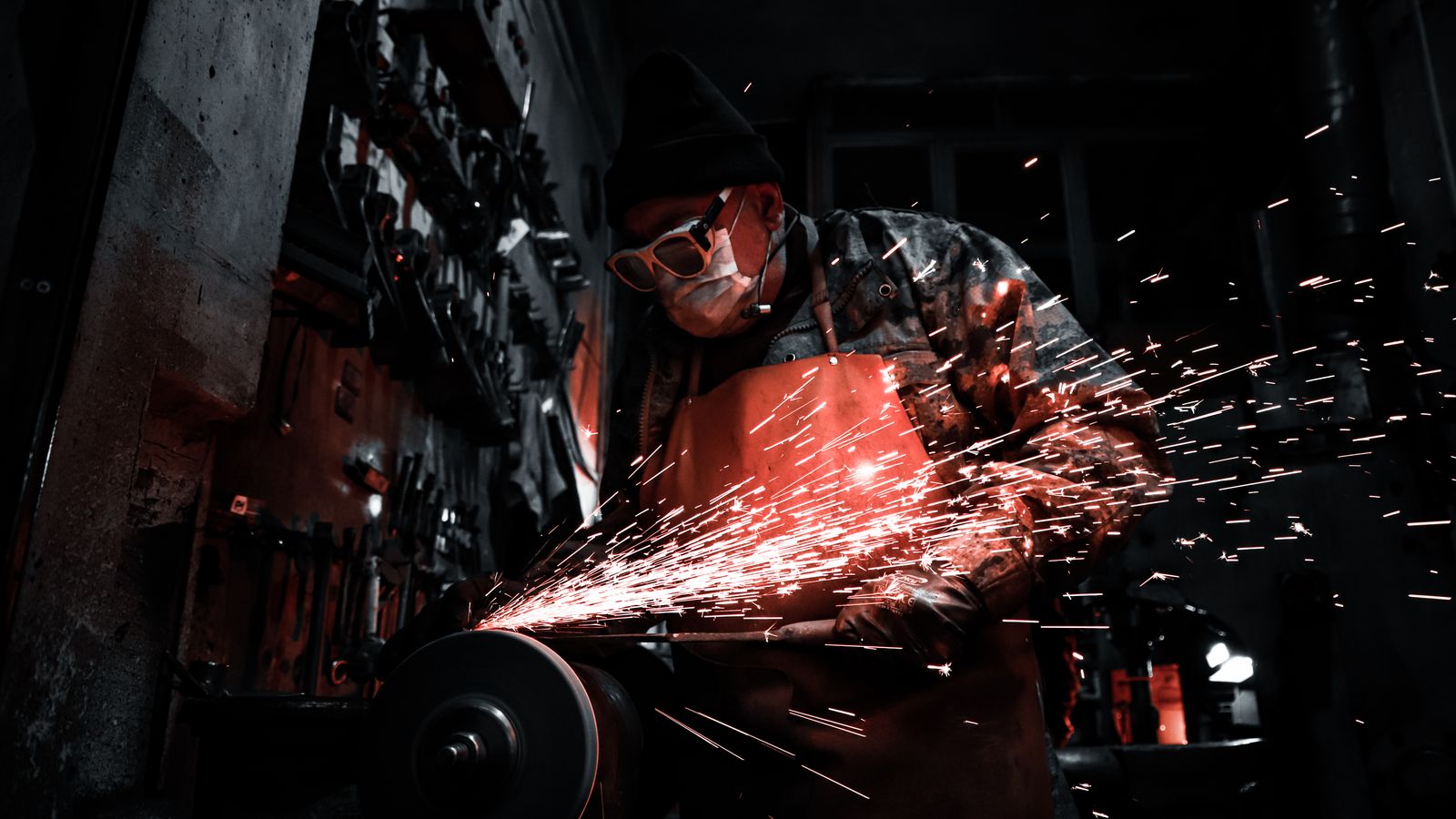
Most workshop injuries in Kenya are to the eyes and hands, simply because those are the parts closest to the work. A cutting disc throws sparks and grit at high speed. A wire brush sheds bristles. A chisel chips. A hacksaw slips. Welding adds ultraviolet light that burns the surface of the eye without any warning at the time.
The good news is that this is the easiest injury group to prevent. Goggles and gloves are light, cheap and quick to put on. The difficulty is never the cost, it is the habit. The sections below cover what to buy, and the last section covers how to make wearing it automatic.
Safety goggles: what to look for
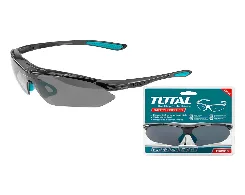
For grinding, cutting, drilling overhead and chipping, you need goggles or safety glasses with impact rated lenses that wrap around the side of the eye. Ordinary spectacles and sunglasses do not count. They shatter on impact and leave the sides open, which is exactly where a bouncing spark comes from.
Choose a pair that seals reasonably against the face without fogging up, because a fundi who cannot see through fogged goggles takes them off. Vented frames help in hot workshops. A clear lens is right for indoor and general use. If you wear prescription glasses, choose goggles sized to fit over them rather than working without.
Replace goggles when the lens is scratched enough to blur the work. Scratched lenses cause people to push them up onto the forehead and work unprotected, which defeats the point. Keep a spare pair in the toolbox so a lost or broken pair does not become an excuse.
- Impact rated lens, wraparound or side shields
- Comfortable seal, vented to reduce fogging
- Clear lens for general work, replace when scratched
- One pair per person, plus a spare in the shop
Welding: masks, goggles and auto darkening glasses
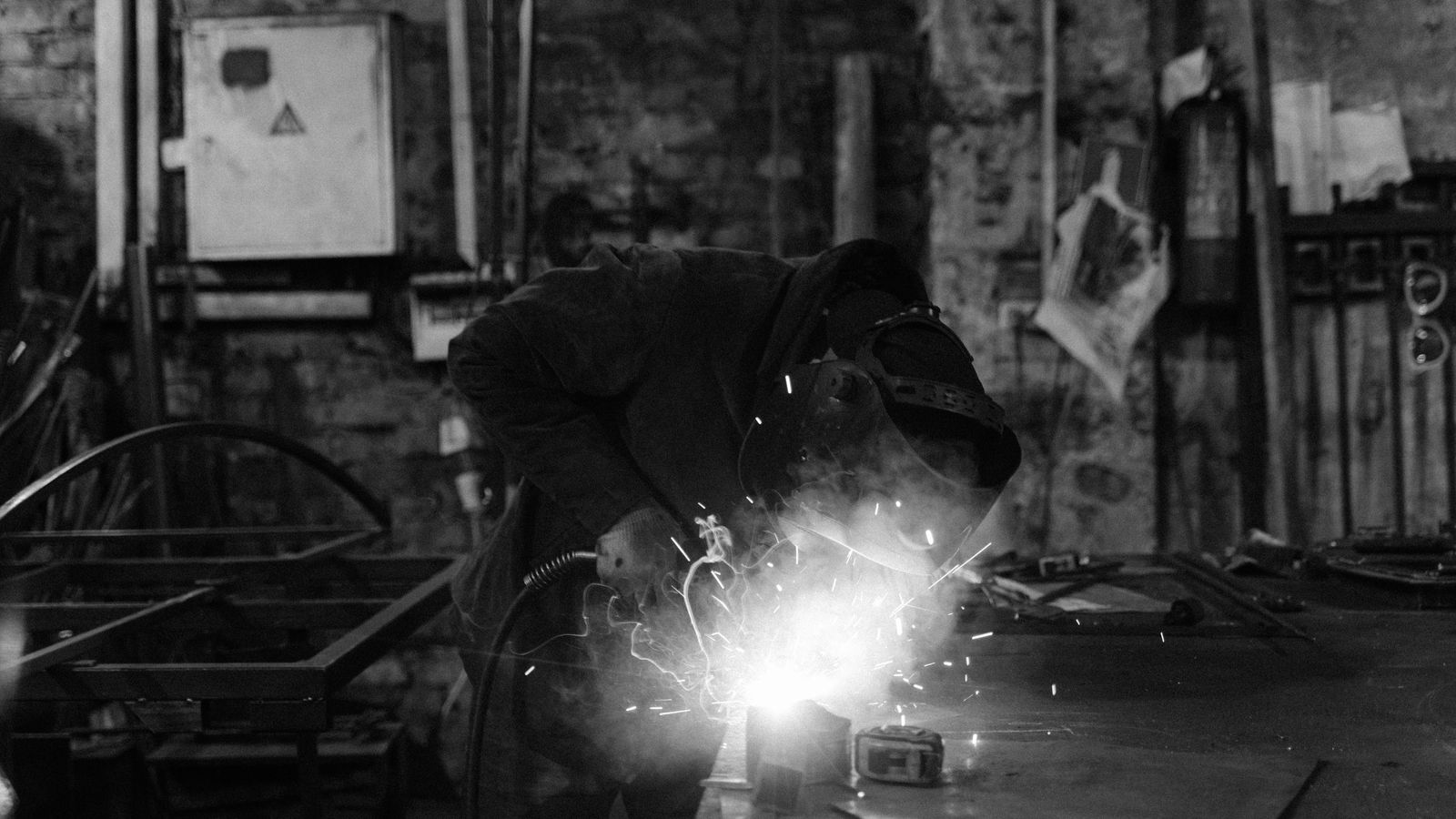
Welding needs different protection because the hazard is light, not flying grit. Arc welding gives off intense ultraviolet and infrared light that burns the cornea, the painful condition welders call arc eye or flash. It also burns exposed skin on the face and neck. A proper welding mask with a shaded filter lens blocks that light. Safety goggles do not.
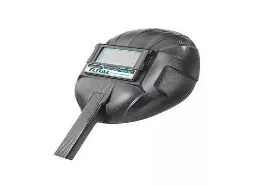
A standard welding mask with a fixed shade lens is the simplest and toughest option. You flip it down before striking the arc and lift it to inspect the weld. It works well for a fundi who welds in long runs. The limitation is that you cannot see the joint through the dark lens until the arc is lit, so positioning the rod takes practice.
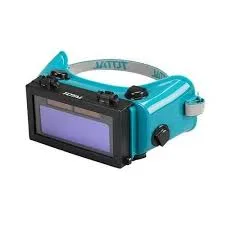
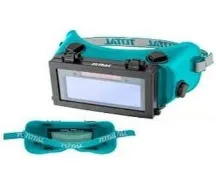
Auto darkening welding goggles and glasses use a lens that is clear until the arc strikes, then darkens in a fraction of a millisecond. You see the joint, strike, and the lens is already dark. For tack welding, short welds and awkward positions this saves time and improves accuracy. Auto darkening goggles are compact and suit fabricators who move between welding and grinding, while the full mask gives more face and neck coverage for heavy work.
Whichever you use, check the filter before every session. Cracked or pitted filters let light through. Auto darkening lenses need their sensors kept clean and their batteries or solar cells uncovered. If you are also grinding the weld afterwards, lift the mask and put on goggles, because a welding filter is not impact rated for grinding and you cannot see grinding work through it.
Gloves: leather for most jobs
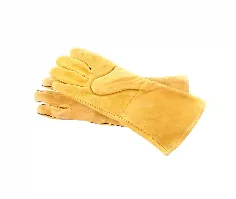
For handling steel, timber, blocks and rough materials, a leather work glove is the right choice. Leather resists cuts and abrasion, protects against splinters and hot metal, and lasts months of daily use. It also keeps a grip when hands sweat, which thin fabric gloves do not. For welding, leather gloves with a long cuff protect the wrist and forearm from sparks and from touching hot work.
There is one job where gloves come off: using a drill press, bench grinder or any machine with a rotating spindle. A glove that catches on a rotating part pulls the hand in with it. For those machines, work bare handed and keep sleeves tight. Fit is the other thing to get right. Gloves that are too big reduce your grip and get caught on things.
Wash leather gloves rarely and let them dry slowly away from heat. Replace them when the fingertips or palm wear through, because a glove with a hole offers no protection where it matters.
- Leather for handling, grinding, cutting and welding
- Long cuff for welding and hot work
- No gloves on drill presses, bench grinders or lathes
- Replace when the palm or fingertips wear through
Matching the protection to the job
Grinding and cutting with an angle grinder: goggles always, leather gloves, hearing protection if you can get it. Sparks travel several metres, so people nearby need goggles too. Hacksawing and chiselling: goggles and gloves. Drilling overhead or into masonry: goggles, because dust and chips fall straight into the eye. Arc welding: welding mask or auto darkening goggles, long cuff leather gloves, long sleeves, and goggles for the grinding afterwards.
Handling blocks, timber and steel: leather gloves. Painting with a spray gun: goggles and a mask for the mist. Working with a brush cutter or grass trimmer: goggles, because the line throws stones. The pattern is simple. If something can fly off the work, wear goggles. If something can cut, burn or splinter the hand, wear gloves.
Making it stick on site
The fundis who always wear protection are the ones who have made it part of the tool. Goggles hang on the grinder's cable or sit in the case. Gloves live in the back pocket. The welding mask hangs on the welding machine. When the protection is where the tool is, putting it on takes no thought.
For a shop with several workers, buy enough so that nobody is sharing. Shared goggles get lost, scratched and quietly stop being used. Make it a rule that nobody switches on a grinder or strikes an arc without goggles or a mask, and apply it to the owner as well. A workshop where the boss grinds without goggles will never get the workers to wear theirs.
Keep the first aid basics for eyes in the shop: clean water for rinsing and a clean cloth. Anything embedded in the eye needs a clinic, not a steady hand with tweezers. And a welding flash that still hurts hours later should be checked, because the eye needs to be examined for damage.
What ToolHub Kenya stocks
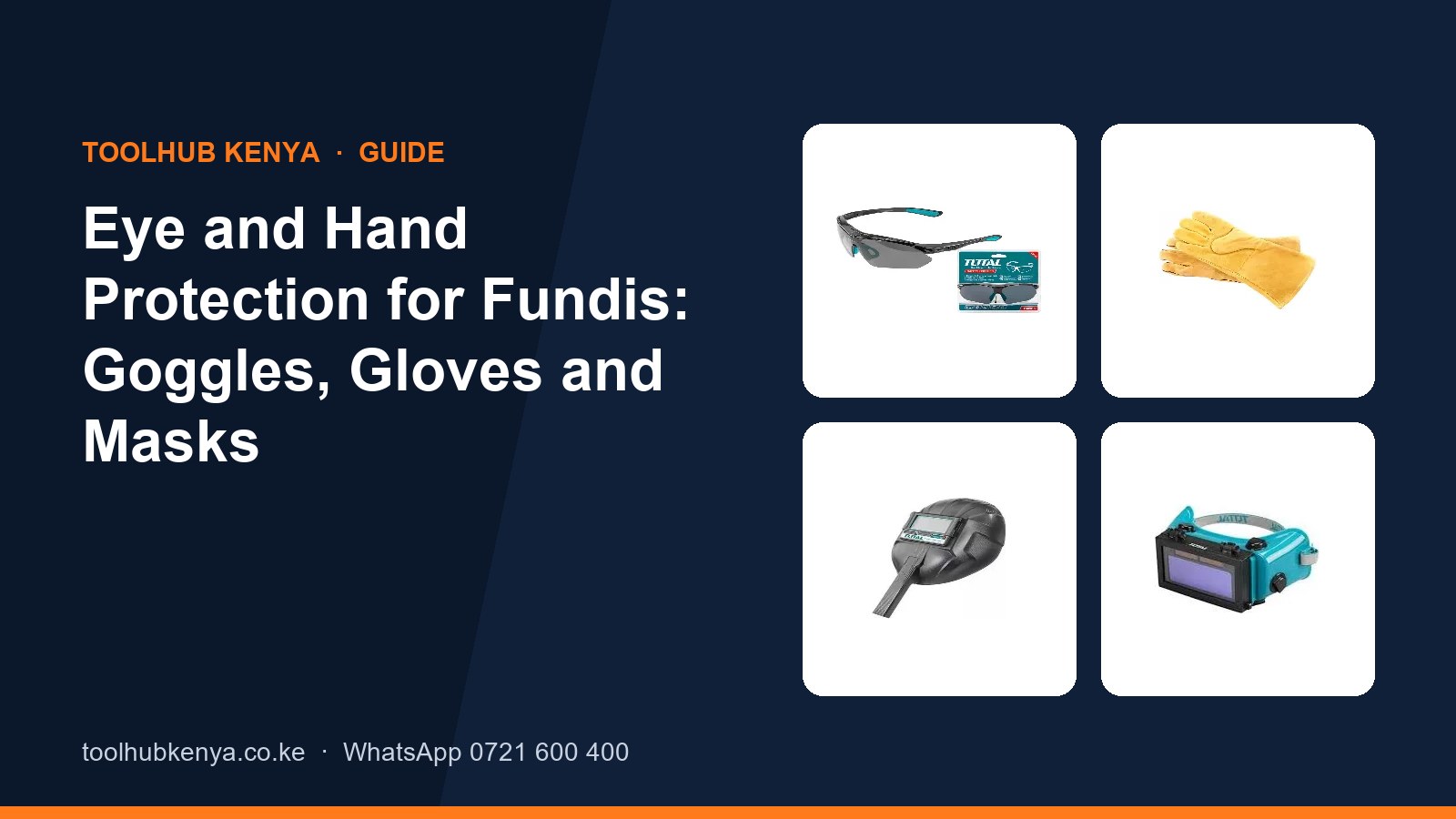
ToolHub Kenya carries Total safety goggles for grinding and general work, leather gloves for handling and welding, and welding protection in three forms: the Total welding mask with a fixed lens, the auto darkening welding goggle, and auto darkening glasses for fabricators who want the lightest option. Tell us what work you do most and we will suggest the combination that suits it, and send a quotation on WhatsApp.
Tools mentioned in this guide
Prices change with stock and supplier costs, so we quote on WhatsApp. Send us the tool and your town for today's price and availability.
Frequently asked questions
Are ordinary spectacles or sunglasses enough for grinding?
No. They are not impact rated and they leave the sides of the eye open. Use safety goggles or safety glasses with side shields that wrap around the face, and wear them over prescription glasses if you need both.
Can I weld wearing safety goggles if I look away from the arc?
No. The ultraviolet light from an arc burns the eye even when you are not looking straight at it, and clear goggles do not block it. Use a welding mask or auto darkening welding goggles every time, even for a single tack.
What is the difference between a welding mask and auto darkening goggles?
A standard mask has a fixed dark lens and covers the whole face. Auto darkening goggles stay clear until the arc strikes, so you can see the joint while positioning the rod. The mask gives more face coverage for heavy welding, the goggles suit short welds and tight spaces.
Should I wear gloves when using a bench grinder or drill press?
No. Gloves can catch on a rotating spindle, wheel or chuck and pull the hand in. On those machines work bare handed, keep sleeves tight and wear goggles.
How often should goggles be replaced?
Replace them when the lens is scratched enough to blur the work, or after any heavy impact that cracks or pits the lens. A lens you cannot see through clearly will end up on your forehead instead of over your eyes.