Comparisons
Impact Drill vs Rotary Hammer: Which Drill for Concrete Walls
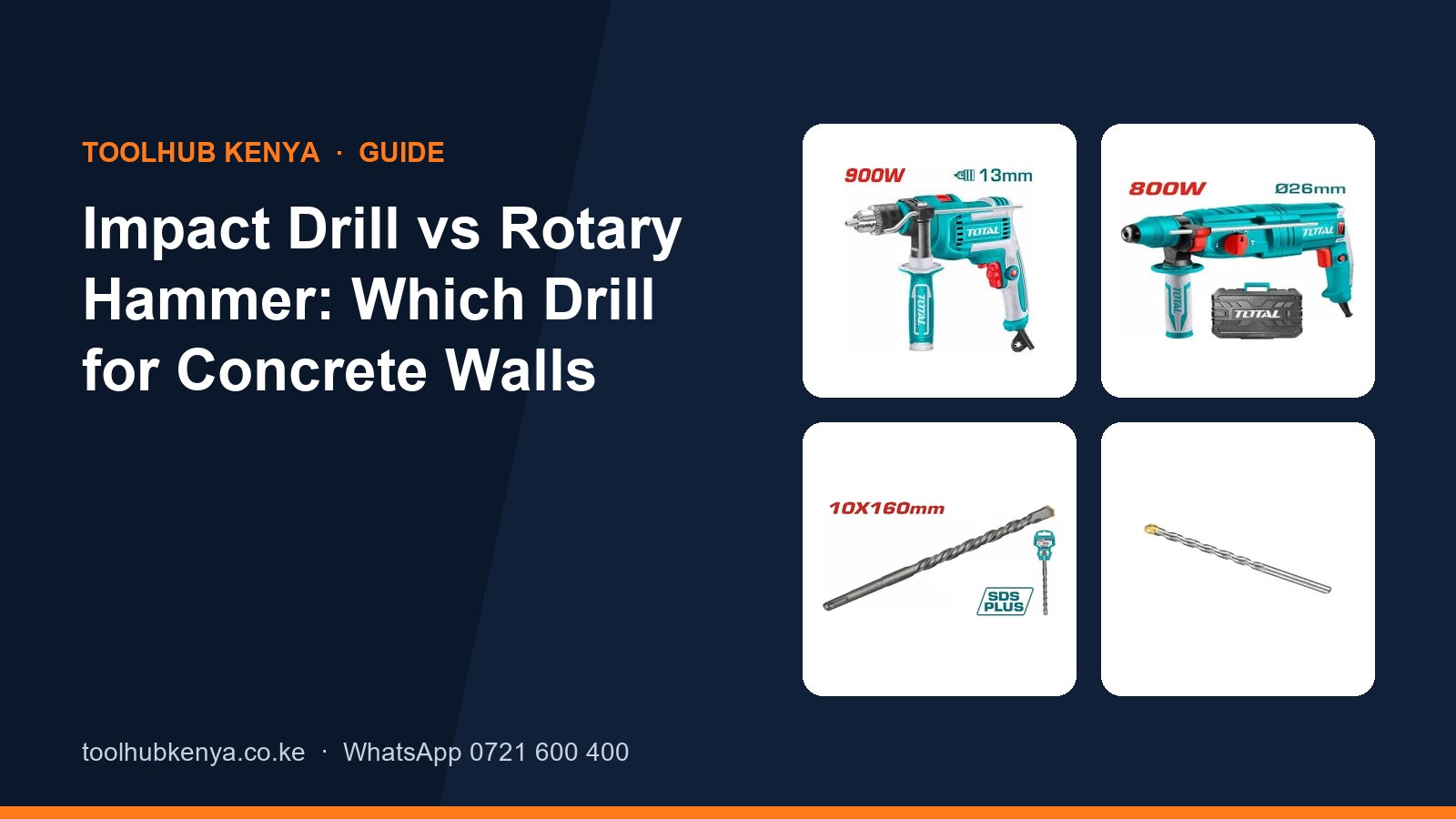
Most drilling problems in Kenya start with the same mistake: using an ordinary drill on a concrete wall. The bit skates, the motor smells hot, the hole takes ten minutes and comes out oversized and crooked. Concrete, stone and hard engineering brick need a tool that hits as well as turns. Two tools do that, the impact drill and the rotary hammer, and they are not the same thing. This guide explains how each one works, which jobs suit each, and which bits to fit, so you buy once and drill cleanly.
In this guide
What an impact drill actually does
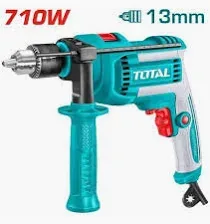
An impact drill, sometimes called a hammer drill or percussion drill, is a normal drill with an extra mechanism. Two toothed discs rub against each other as the chuck spins, and every time the teeth climb over one another the chuck jerks forward slightly. That gives thousands of tiny forward taps a minute on top of the rotation. The taps are shallow and light, and they only happen while you push hard into the wall, because it is your pressure that keeps the discs in contact.
This is why an impact drill feels like hard work on concrete. You supply the force and the tool supplies the rhythm. On plastered masonry stone, hollow blocks and softer concrete it works well enough for fixing curtain rails, shelves, water pipes and conduit. On hard cast concrete, a column or a ring beam, it slows to a crawl and heats the bit.
The upside is versatility. Switch the impact action off and you have an ordinary drill for timber and steel, with a standard three jaw chuck that takes any round shank bit. For a fundi who drills a bit of everything, a good impact drill in the 710 W to 900 W range is a sensible first machine.
- Best for: plastered walls, machine cut stone, hollow blocks, light fixings
- Also drills: timber, steel, plastic, with the hammer action switched off
- Needs: firm pressure from you, and a masonry bit with a carbide tip
- Struggles with: hard poured concrete, deep anchor holes, holes over 13 mm
What a rotary hammer does differently
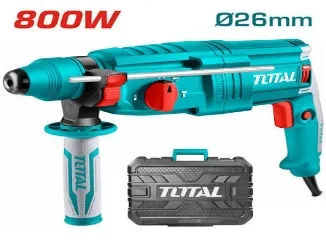
A rotary hammer uses a piston inside the body, driven by the motor, that compresses air and fires a striker against the back of the bit. The blows are far heavier than the taps of an impact drill and they do not depend on how hard you lean on the tool. You hold the machine straight and let it work. That is why an 800 W rotary hammer out-drills a 900 W impact drill in hard concrete by a wide margin.
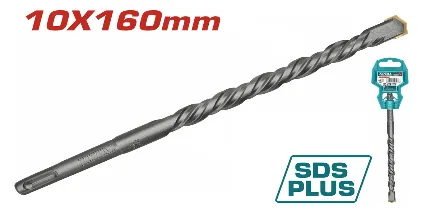
The bit fits an SDS Plus holder instead of a keyed chuck. The shank slides in and locks with a quarter turn, and it is free to move back and forth so the hammer energy reaches the tip. SDS Plus bits are sold separately from ordinary masonry bits and are not interchangeable with a three jaw chuck, so budget for a small set when you buy the machine.
Most rotary hammers have three modes: rotation only, rotation with hammer, and hammer only. Hammer only with a pointed or flat chisel turns the tool into a light breaker for cutting a chase for conduit, lifting tiles or widening a hole for a pipe. That single feature saves a lot of hand chisel work on site.
- Best for: poured concrete, columns, slabs, deep anchor holes, repeated drilling all day
- Modes: drill, hammer drill, chisel only
- Needs: SDS Plus bits and chisels, light steady pressure
- Not ideal for: fine holes in timber or steel, because the SDS holder has slight play
Side by side: speed, effort and hole quality
In a plastered stone wall, both tools will make an 8 mm hole for a wall plug in a few seconds. The difference shows in concrete. A fundi fixing a steel gate frame to a concrete column with 12 mm anchors can spend minutes per hole with an impact drill, leaning in, backing out to clear dust and letting the bit cool. The same hole with a rotary hammer takes well under a minute with no leaning at all.
Hole quality also differs. Because the impact drill depends on your pressure, the bit wanders if your stance is not square, and the hole opens out at the mouth. A rotary hammer bit tracks straighter because the blows drive it along its own axis. For anchor bolts, which need a snug hole to grip, that matters.
Effort matters more than people expect. Thirty holes in concrete with an impact drill leaves your wrists and shoulders aching, and tired operators make crooked holes. Thirty holes with a rotary hammer is an ordinary morning.
Which one should you buy
Choose an impact drill if most of your work is in houses and offices: hanging shelves, fixing brackets, running conduit on plastered walls, with timber and steel drilling in between. One tool covers it all, it fits in a small bag, and standard bits are sold in every hardware shop. The Total impact drill 900 W and the 710 W model cover this range, with the 900 W worth having if you meet concrete regularly.
Choose a rotary hammer if you work in construction, installation or fabrication: anchoring frames, fixing conduit into slabs and columns, drilling for water pipes through ring beams, or chasing walls for electrical work. The 800 W rotary hammer is the all round size, light enough to hold overhead for a few holes but powerful enough for a day of anchor holes. The SDS hammer drill in the Total range is a compact option for installers who drill concrete often but carry everything in one bag.
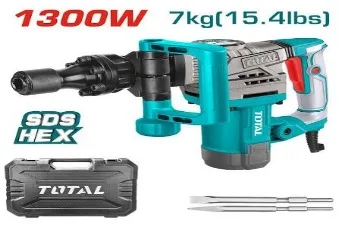
If your work is mostly breaking rather than drilling, opening doorways, removing floor screed, cutting large chases, look past both and at a demolition breaker. The 1300 W breaker is a hammer only tool with no drilling mode, and it is far more effective at demolition than a rotary hammer in chisel mode.
- Household and light commercial fixing: impact drill 710 W or 900 W
- Construction and installation into concrete: rotary hammer 800 W
- Compact concrete drilling for installers: SDS hammer drill
- Breaking and chasing all day: demolition breaker 1300 W
Bits: the part most people get wrong
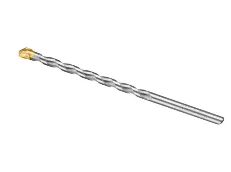
An impact drill needs masonry bits with a carbide tip brazed on, in standard round shanks. The 6 mm and 8 mm sizes match the common wall plugs and most of the holes you will ever drill in a house. Keep two of each, because a bit that has been overheated turns blue at the tip and stops cutting, and a blunt bit is the usual reason an impact drill seems weak.
A rotary hammer needs SDS Plus bits. They have the grooved shank and are built heavier because they take a real beating. A starter set with 6, 8, 10 and 12 mm covers plugs, anchors and conduit fixings. Add a flat chisel and a pointed chisel for chasing. Do not try to fit an SDS bit into a keyed chuck or a round bit into an SDS holder, neither will hold.
Whichever tool you own, clear the dust every few seconds by pulling the bit back while it spins. Dust packed at the bottom of the hole absorbs the blows and the bit stops cutting. A quick in and out motion keeps the hole clean and the bit cool.
Technique that makes either tool work better
Mark the hole with a nail punch or a small dent so the bit does not walk. Start the hole in rotation only for a second or two, then switch to hammer mode once the tip has bitten. Stand square to the wall with both hands on the tool and your weight behind it, more so with an impact drill. Keep the bit at the same angle throughout, because changing angle halfway bends the bit and widens the hole.
If you hit rebar, you will feel the bit stop and hear the note change. Do not force it. Back out, move the hole a few centimetres and try again. A masonry bit cannot cut steel and pressing on simply ruins the tip. In a column or beam, expect rebar near corners and at regular spacing, and lay out holes to avoid it where you can.
Let the tool cool between heavy holes. A motor that smells hot is telling you to pause. Rotary hammers in particular need a few minutes rest after a long chisel session, because the piston mechanism runs hot.
Looking after the tool
Blow the dust out of the vents at the end of each day, especially after concrete work, because cement dust is abrasive and gets into the bearings. Wipe the SDS holder and put a little grease on the shank of each bit before fitting it, which the tool manual will also tell you to do. Check the carbon brushes every few months of heavy use and replace them when they are short, before the motor starts sparking badly.
Store the machine in its case with the bits, not loose in a bag with other tools where the chuck or SDS holder can be knocked. Keep it dry. If a rotary hammer loses its hammer action but still spins, the grease inside has usually dried out or the piston seal needs attention, which is a job for a repair technician, not a reason to buy a new tool.
Tools mentioned in this guide
Prices change with stock and supplier costs, so we quote on WhatsApp. Send us the tool and your town for today's price and availability.
Frequently asked questions
Can an impact drill drill concrete at all?
Yes, in lighter concrete and masonry stone it works, especially with a sharp carbide bit and firm pressure. In hard poured concrete it is slow and tiring, and for holes over 13 mm or deeper than about 100 mm a rotary hammer is the right tool.
Will a rotary hammer drill timber and steel too?
It can in rotation only mode, but the SDS holder has slight play, so holes are less precise than from a keyed chuck. Some fundis fit an SDS to chuck adaptor for occasional use. If you drill steel and timber often, keep an ordinary drill as well.
Do I need special bits for a rotary hammer?
Yes. Rotary hammers take SDS Plus bits with a grooved shank. Standard round shank masonry bits do not fit and will not hold. Buy a small SDS Plus set in 6 to 12 mm plus a flat and a pointed chisel when you buy the machine.
Is a rotary hammer a replacement for a demolition breaker?
No. Chisel mode on a rotary hammer is fine for chases, tiles and small openings. For breaking screed, walls or large openings a dedicated breaker is far faster and does not overheat doing it.
What size rotary hammer is right for general construction work?
An 800 W class SDS Plus machine suits most building and installation work in Kenya. It handles anchor holes, conduit fixings and light chasing all day, and is still light enough to use overhead for short periods.