Comparisons
Cordless vs Corded Drill: Which Suits Kenyan Work?
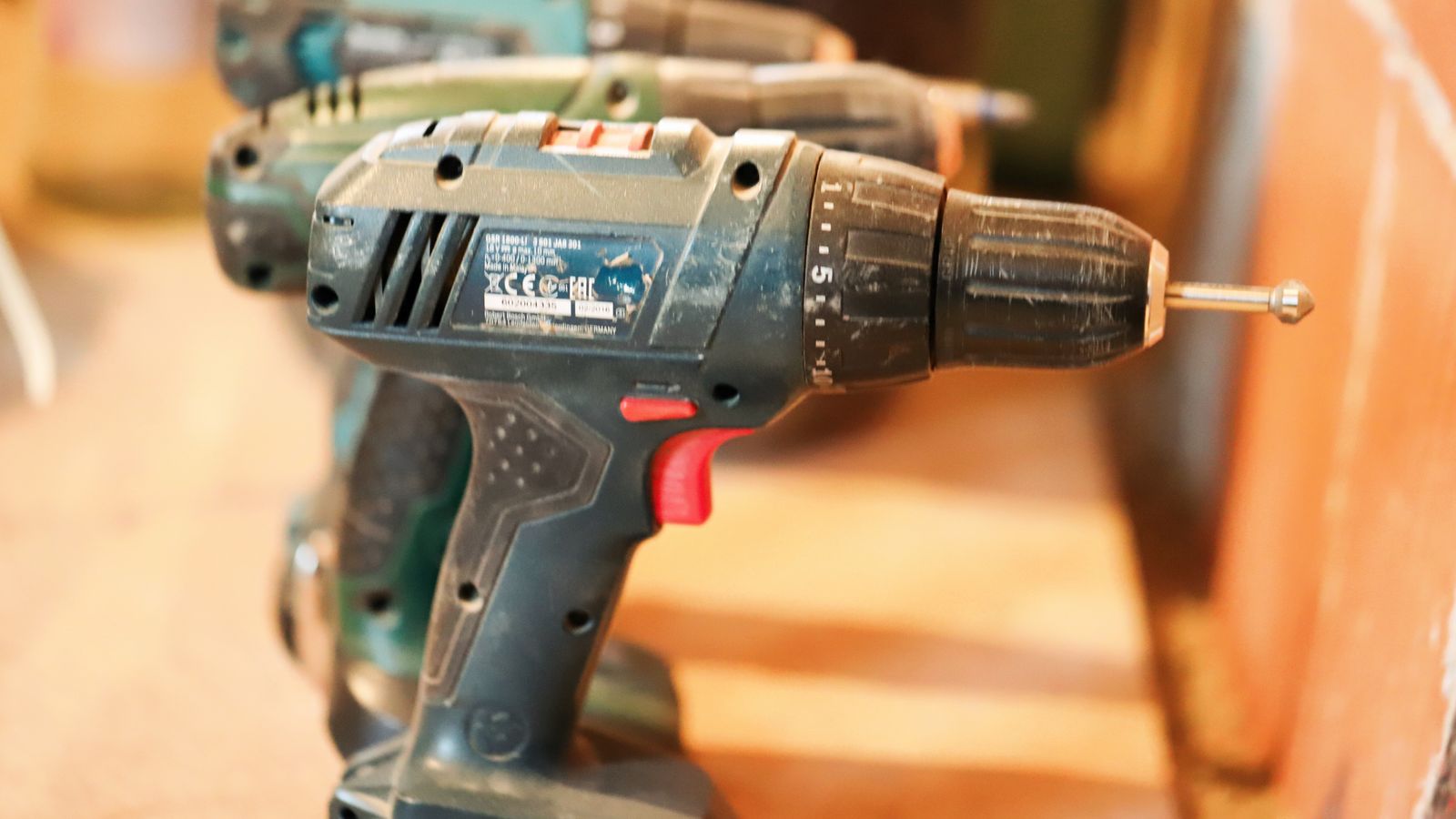
Every fundi eventually faces the cordless drill vs corded drill decision, usually after one job too many with no socket in reach or one power cut too many halfway through a ceiling. Both types still earn their place in Kenyan work. This guide covers what each one does well, how batteries behave on site and on a generator, what brushless changes, and how to match the drill to the work you do each week.
In this guide
- What Really Separates a Cordless Drill From a Corded Drill
- Power Cuts, Generators and Charging a Cordless Drill Battery
- Corded Drills on 240V 50Hz and the Jobs They Still Win
- Cordless Hammer Drill or Corded Impact Drill for Block and Concrete
- Battery Platforms: 18V vs 20V and Why Mixing Brands Strands You
- Brushless vs Brushed Motors, Dust and Local Spares
- Which Cordless Drill Is Best for Home Use?
What Really Separates a Cordless Drill From a Corded Drill
A corded drill takes power straight from the wall, so it gives the same output from the first hole of the day to the last. A cordless drill carries its power in a battery pack, so it goes wherever the work is, but the output falls as the pack drains.
Weight follows from that. A corded machine is lighter in the hand because the battery is not part of the tool, but you are always managing a cable and a socket. A cordless drill is heavier at the handle and shorter front to back, which helps inside a cabinet or up a ladder.
The wearing parts differ too. A corded drill eventually needs carbon brushes, a switch or a cable, and any repair bench can fit those. A cordless drill wears out battery cells, and cells age with every charge cycle whether you use the tool or not.
- Corded: steady output, lighter body, needs a live socket nearby
- Cordless: works anywhere, but output drops as the pack drains
- Corded wears cable, switch and carbon brushes, all easy to replace
- Cordless wears battery cells, which age even in storage
- Corded suits long continuous runs, cordless suits short bursts
Power Cuts, Generators and Charging a Cordless Drill Battery
Power cuts are the main reason many Kenyan fundis moved to battery tools. When the supply drops mid job, a corded drill stops and the crew stands idle. A charged cordless drill keeps working, and a second pack on the bench keeps it working all afternoon.
Charging on a generator works, but treat it with care. Small petrol sets, especially older ones that are not inverter type, swing in voltage when another load switches on. Let the set settle before plugging in the charger, and unplug before you shut it down.
Plan charging around the job. Put packs on charge overnight while mains power is on, and carry at least two packs where there is nowhere to plug in. Heat kills lithium cells faster than use does, so let a hot pack cool before charging and keep packs off a hot dashboard.
Corded Drills on 240V 50Hz and the Jobs They Still Win
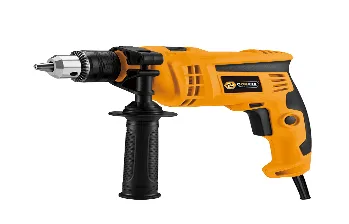
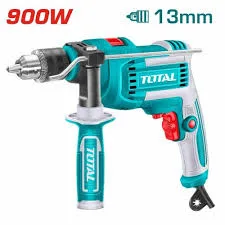
Kenyan homes and small workshops run on 240V 50Hz single phase supply, and corded drills sold here are built for it. Check the rating plate on anything brought in from outside before you plug it in. A machine such as the Coofix Drill 710W or the Total Impact Drill 900W (TG1091366) holds its speed for as long as you hold the trigger down.
For bench work, repetitive drilling, hole saws and mixing paddles, corded remains the sensible choice. Those jobs draw current steadily for minutes at a time, which flattens a battery and heats it on the way. Use an extension rated for the tool, unwind it fully, and keep it behind you and out of the cut line.
Replace a damaged plug or split insulation rather than taping it up, and on premises with doubtful earthing have a qualified electrician check the circuit first.
Cordless Hammer Drill or Corded Impact Drill for Block and Concrete
Most Kenyan walls are masonry: concrete block, stone, and cast slabs and columns. Drilling them needs percussion, not just rotation. A cordless hammer drill handles anchors for curtain rails, conduit clips and brackets in block very well, without dragging a cable through a finished room.
When the material is dense cast concrete, or you have dozens of holes in one session, a corded impact drill or a rotary hammer finishes faster and will not stall. Percussion is the hardest work you can ask of a battery. Fit a carbide masonry bit, keep it straight, and pull it out regularly to clear dust. Never run hammer mode with a wood or tile bit.
Battery Platforms: 18V vs 20V and Why Mixing Brands Strands You
A cordless drill is not one purchase, it is entry into a battery platform. The pack, the charger and every cordless tool you buy later must share the same mount and the same electronics. Packs from different brands do not interchange even when the voltage matches.
The 18v vs 20v cordless drill question confuses many buyers, and the answer is that the two numbers usually describe the same battery. A five cell lithium ion pack reads about 20V off the charger and settles near 18V in use. Some makers print the peak figure, others the nominal one.
So choose the platform as carefully as the drill. Ask what other tools run on the same pack, and whether spare packs and a charger can be bought here. A spare such as a Lithium-Ion Battery Pack 2.0Ah (TFBLI20011) is worth having early, because a one pack drill leaves you waiting mid job.
- Packs do not swap between brands, whatever the voltage says
- 18V nominal and 20V maximum normally describe the same pack
- Confirm spare packs and chargers are sold locally before committing
- Carry a second pack so one charges while the other works
- Keep the charger safe; it is brand specific too
Brushless vs Brushed Motors, Dust and Local Spares
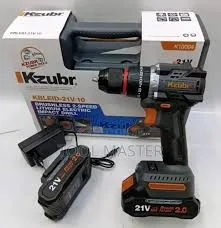
A brushed motor uses carbon brushes pressing on a commutator to switch current into the windings. They rub, spark and wear down. A brushless motor does that switching electronically, so nothing rubs. It runs cooler and gets more work out of each charge, which is why a machine such as the Brushless Cordless Drill 20V (KZUBR) suits daily use.
Brushed tools are far from finished. They are simpler, they shrug off dust and rough handling, and when one sparks heavily the fix is usually a fresh set of carbon brushes, which tool shops across Kenya keep on the shelf. A brushless machine that fails electronically needs a controller board and a specialist.
Kenyan sites are dusty, and cement dust and murram get into vents and switches. Blow the vents clear with dry air after a dusty day, wipe grit off the battery rails before sliding a pack home, and store packs part charged if the tool will sit idle.
Which Cordless Drill Is Best for Home Use?
For a homeowner hanging shelves, assembling furniture and doing occasional repairs, a cordless drill is the better first tool. It is quicker to pick up, it still works during a power cut, and it needs no socket in the room. Look for a keyless chuck, a torque clutch, two speeds and a hammer setting.
For a workshop or a fundi doing heavy repetitive drilling, buy the corded machine first and add cordless later. Most crews end up with both: a corded drill on the bench and a cordless one on the belt. Buy a bit set covering masonry, steel and timber along with the tool. To see what ToolHub Kenya has available now, message the team on WhatsApp at +254 721 600 400. Delivery is available across Kenya.
Tools mentioned in this guide
Prices change with stock and supplier costs, so we quote on WhatsApp. Send us the tool and your town for today's price and availability.
Frequently asked questions
Which cordless drill is best for home use in Kenya?
Pick a compact cordless drill with a keyless chuck, an adjustable torque clutch, two speeds and a hammer setting for block walls. A brushless motor gives longer runtime per charge if you use it often. Just as important, get a second battery pack.
Is a 20V cordless drill more powerful than an 18V one?
Usually not, because they are normally the same battery described two ways. A five cell lithium ion pack reads about 20V fresh off the charger and about 18V in normal use. Some makers print the peak figure, others the nominal one.
My cordless drill is not working. What should I check first?
Check the battery first. Try a known good pack, look for grit or corrosion on the rails and contacts, and confirm the charger lights behave normally. Then check the forward and reverse switch is not sitting in the middle lock position, and that the chuck is not slipping.
Can I charge a cordless drill battery on a generator?
Yes, but let the set run and settle before plugging in the charger, and avoid charging while a welder on the same generator is switching on and off. Unplug the charger before shutting the set down. Older generators have an unsteady output that chargers handle poorly.
Is a cordless hammer drill enough for concrete?
It is fine for anchors, conduit clips and brackets in block and light concrete. For dense cast concrete, deep holes or dozens of holes in one session, a corded impact drill or a rotary hammer will be faster and will not overheat a battery pack.