Farm & Garden
Choosing a Water Pump for Your Farm: Submersible, Solar or Surface
Picking the right water pump for a farm in Kenya saves you wasted diesel, burnt-out motors and crops that wilt while you wait for water to arrive. Boreholes, shallow wells, rivers, dams and storage tanks all behave differently, and each pump type, submersible, surface, solar or petrol, suits a different job. This guide walks Kenyan smallholder and commercial farmers through water source limits, head and flow, power choices, irrigation methods and simple maintenance, so you can talk to ToolHub Kenya on WhatsApp with the right questions.
In this guide
- Understanding Your Water Source and Suction Lift
- Choosing a Farm Water Pump in Kenya: Matching Head and Flow
- Submersible Pumps: Strengths and Limits
- Surface Pumps for Farm Use
- Solar Water Pumps for Off-Grid Farms
- Power Options: Grid, Solar and Petrol
- Matching the Pump to Your Irrigation Method
- Keeping Your Water Pump Running
Understanding Your Water Source and Suction Lift
Every farm draws water from somewhere different, and that source decides which pump will work. Common sources include a drilled borehole, a shallow hand-dug well, a river, a dam or pond, and a raised storage tank. Each behaves differently for suction, the term for how a pump pulls water up before pushing it onward.
A surface pump sits above the water and can only pull it up a limited distance, since it relies on atmospheric pressure to push water into the intake. Most surface pumps struggle beyond about 7 to 8 metres of vertical suction lift, even though the theoretical limit is close to 10 metres at sea level. Boreholes are almost always deeper than that, which is why a borehole needs a submersible pump lowered into the water instead.
- Borehole: usually needs a submersible pump because water sits many metres down
- Shallow well or tank: often within reach of a surface pump's suction lift
- River or dam: a surface or petrol-driven pump can draw water if the bank is close and low
Choosing a Farm Water Pump in Kenya: Matching Head and Flow
Two numbers matter more than any pump's power rating: total head and flow. Total head is the resistance the pump must overcome, made up of vertical lift plus friction losses in the pipe and fittings plus any pressure needed at the delivery point. Flow is how much water arrives over time, usually in litres per minute or cubic metres per hour.
Take a borehole where the water level sits 25 metres below ground, feeding a tank standing 5 metres above ground level. That gives a static lift of 30 metres. Add roughly 10 percent for friction losses in the rising main, and the total dynamic head comes to about 33 metres. If that tank needs 3,000 litres an hour, you now have the two figures, head and flow, worth describing to ToolHub Kenya on WhatsApp, rather than asking for a '1HP' pump and hoping it suits your borehole and tank height.
- Static lift: vertical distance from the water surface to the pump or delivery point
- Friction loss: energy lost as water moves through pipe, bends and valves
- Total dynamic head: static lift plus friction loss plus any pressure needed at the outlet
Submersible Pumps: Strengths and Limits
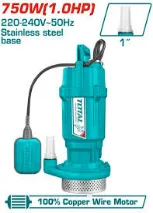
A submersible pump is sealed to run fully underwater, inside a borehole casing or deep well. Water around the motor keeps it cool, and because it pushes water from below rather than pulling it, it is not limited by suction lift the way a surface pump is. This makes it the standard choice for boreholes, and models such as the Total Submersible Pump 1.0HP(TWP67506) or the Total Sewage Submersible Pump1.0HP(TWP87506) suit that kind of deep lift.
The trade-off is access: servicing it means winching it back up through the casing, so cabling and the drop pipe must be installed correctly the first time. It also needs reliable 240V single-phase power or a matched solar controller, wired through a control box by a qualified electrician. Never let a submersible pump run in a dry borehole, since it relies on surrounding water for cooling.
Surface Pumps for Farm Use
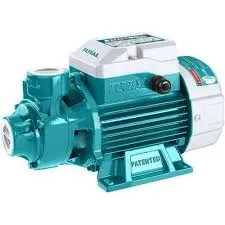
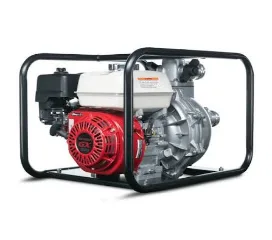
A surface pump stands on dry ground next to the source and draws water through a suction pipe fitted with a foot valve, which stops water draining back between uses. Being above ground makes it easy to inspect, service or move between water points, suiting farmers pumping from a shallow well, a river bank, a dam or a tank. The Water Pump 1HP Surface and the higher-flow Water Pump High Pres 2" are both surface models built for that duty.
The limitation is suction lift. If the pipe run has an air leak at a joint, or the foot valve fails to hold water, the pump loses its prime and stops delivering even though the motor keeps running. Keep suction runs short and airtight, and choose a surface pump only where the source is genuinely within its safe suction lift.
Solar Water Pumps for Off-Grid Farms
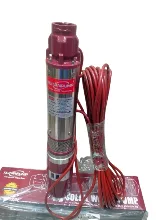
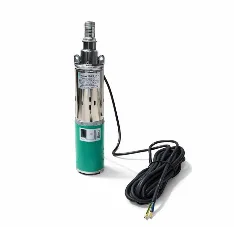
A solar water pump draws its power from photovoltaic panels instead of the grid, either directly as direct current or through a controller that also allows a backup connection. This suits farms without a reliable grid line, or farmers wanting to cut the running cost of a petrol engine or grid electricity. Options in this category include the Solar Pump Rutan 450W, the Submersible Solar Pump 250Watts and the Cevada Submersible Solar Pump.
Because output follows sunlight, flow is strongest around midday and fades with cloud cover or in the evening. Most solar systems pump into an elevated tank during sunny hours, then use gravity to supply drip lines, sprinklers or troughs at any time. Matching panel wattage to the pump and its head is specialist work, so ask ToolHub Kenya on WhatsApp for help matching panels to the pump you are considering.
Power Options: Grid, Solar and Petrol
Farm pumps in Kenya generally run from one of three sources: 240V single-phase mains, solar panels as above, or a petrol or diesel engine driving the pump directly. Grid-powered pumps need correct wiring, earthing and a properly rated cable, which is work for a qualified electrician, especially for a submersible pump's control box.
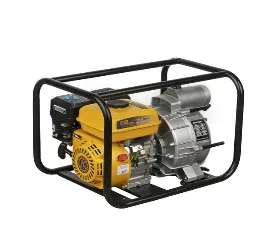
Where there is no power line nearby, an engine-driven pump such as the Water pump 3*3 Ram G can draw water straight from a river or dam without any electrical connection, useful for large-volume jobs like filling a dam or flood-irrigating a field. The trade-off is fuel handling, noise and running the engine every time you need water, rather than switching on a socket.
Matching the Pump to Your Irrigation Method
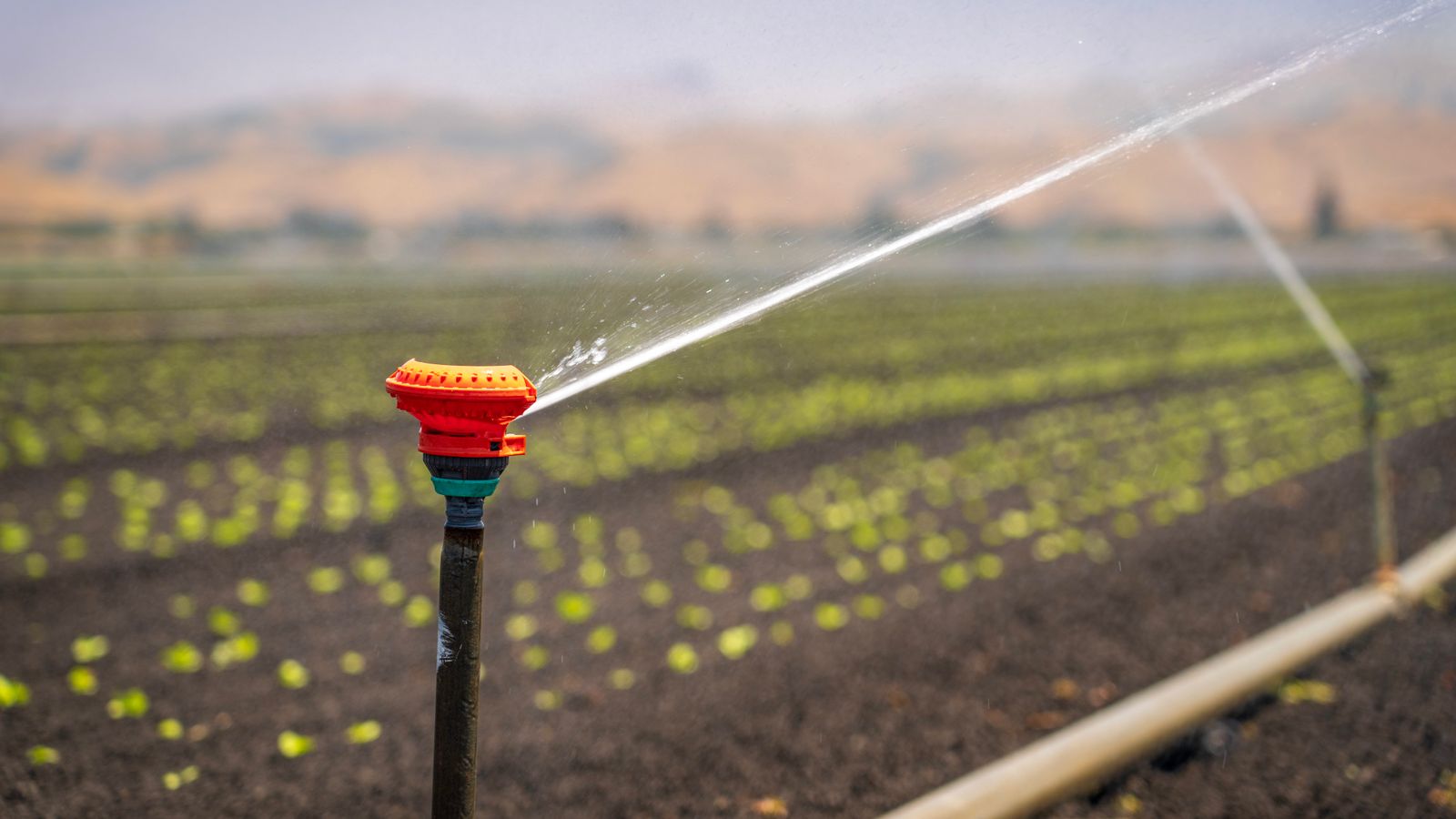
Drip irrigation delivers water slowly and steadily straight to the root zone through small emitters, which needs a moderate, steady pressure and clean, filtered water so the emitters do not clog. It is efficient for vegetables, greenhouses and orchards on farms where water is scarce or costly to lift.
Sprinkler irrigation throws water through the air, needing higher nozzle pressure than drip, while furrow irrigation floods channels between crop rows and needs high flow at comparatively low pressure. Because each method asks for a different combination of head and flow, deciding how you plan to irrigate should come before choosing a pump, not after.
Keeping Your Water Pump Running
Most pump failures trace back to poor intake conditions rather than a faulty pump. A blocked strainer lets grit or plant matter reach the impeller and wear it down, while an air leak in a suction joint stops a surface pump holding its prime. Checking both regularly is the cheapest maintenance a farmer can do.
Never let any pump run dry, since water normally cools and lubricates its moving parts. Have a qualified electrician check cabling, control boxes and earthing periodically, and use a qualified borehole contractor whenever a submersible pump needs lowering, raising or servicing in a borehole. Petrol-driven pumps should be stored with clean fuel and drained before long idle periods.
- Clean or replace the intake strainer before each irrigation season
- Check suction pipe joints and the foot valve for air leaks
- Use a qualified electrician for wiring, control boxes and earthing
- Use a qualified borehole contractor for submersible installation or servicing
Tools mentioned in this guide
Prices change with stock and supplier costs, so we quote on WhatsApp. Send us the tool and your town for today's price and availability.
Frequently asked questions
How do I know if I need a submersible or a surface pump?
If your water sits deeper than about 7 to 8 metres below the pump, as in most boreholes, suction lift limits mean you need a submersible pump lowered into the water. Shallow wells, rivers, dams and tanks within that lift can often use a surface pump instead.
Can a solar water pump work on a cloudy day?
Solar output drops when clouds cover the panels, so flow slows and may stop in heavy cloud. Pairing a solar pump with a storage tank lets you bank water during sunny hours for use later, and some setups add a backup power connection through the controller.
What size pump does my farm need?
Size depends on your total head, the vertical lift plus pipe friction, and the flow you need per hour for your irrigation method and tank size. Ask ToolHub Kenya on WhatsApp for guidance matching a pump to your borehole depth, tank height and irrigation plan.
Is it safe to wire a submersible pump myself?
No. Submersible pumps run in water and need correct earthing, cable sizing and a control box wired by a qualified electrician or borehole contractor. Poor wiring risks electric shock, pump burnout and an unsafe borehole, so always have a professional handle installation.
Which irrigation method uses the least water?
Drip irrigation generally uses water most efficiently because it delivers small, steady amounts straight to the root zone with less evaporation and runoff than sprinkler or furrow systems. It suits vegetables and orchards but needs filtered water and steady pressure to avoid clogging.