Buying Guides
How to Choose a Welding Machine in Kenya
Buying the right welding machine in Kenya can decide whether your jua kali workshop turns out clean, strong joints or wastes electrodes and time. Whether you weld gates, trailers or do light bodywork, the choice between MMA, MIG and TIG, plus the correct amperage and duty cycle, matters more than the brand name. This guide breaks down what to check before you buy a welding machine that Kenyan fabricators can rely on. For today's price on any model, message ToolHub Kenya on WhatsApp.
In this guide
MMA, MIG and TIG welding explained
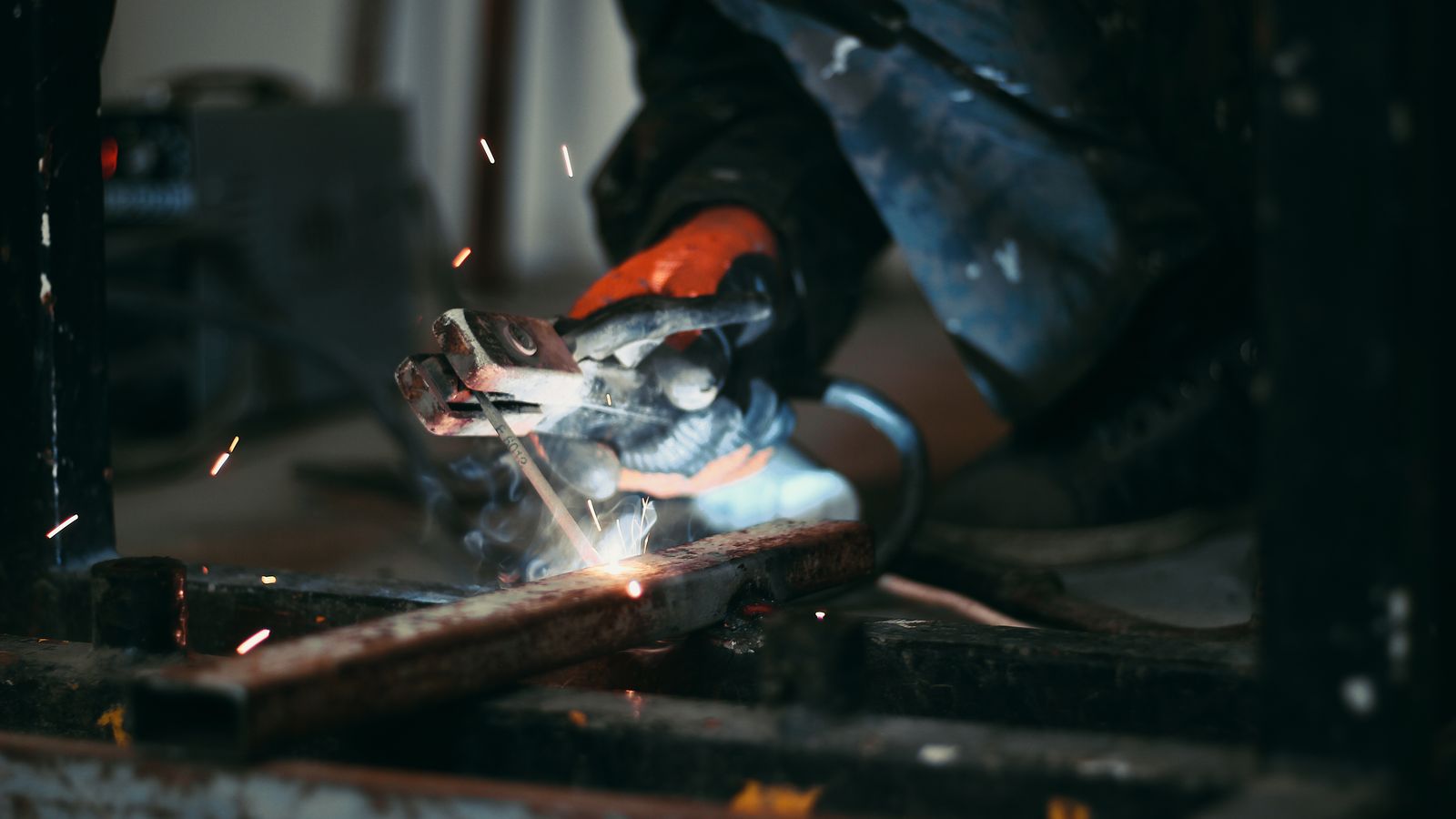
MMA (stick) welding, also called arc welding, uses a flux-coated electrode that melts to form the weld while shielding it from air. It is the process most Kenyan jua kali fabricators start with because the machines are rugged and forgiving of dusty sites, rusty metal and outdoor wind. MMA suits gates, grills, trailers, water tank stands and general structural steel work.
MIG welding feeds a continuous wire electrode through a gun, shielded by gas or a flux-cored wire needing no gas bottle. It welds faster and leaves neater beads on thin sheet metal, which makes it popular for bodywork and light fabrication where appearance matters. MIG generally needs a steadier power supply and more consumables than MMA.
TIG welding uses a non-consumable tungsten electrode with a separate filler rod, giving the cleanest, most precise welds on thin material, stainless steel and aluminium. It is slower and demands more skill, so it fits specialised jobs such as stainless tanks or exhaust work rather than everyday heavy fabrication.
- MMA (stick): rugged, forgiving on rusty or dirty steel, best for structural work
- MIG: faster and neater on clean thin sheet, needs gas or flux-cored wire
- TIG: precision work on stainless steel, aluminium and thin sections
Inverter vs transformer welding machines
Older transformer-based welders use heavy copper windings to step down mains voltage. They are bulky and less efficient, but simple and tough. Inverter welding machines use electronic components to convert power at high frequency, making them far lighter, more portable and more efficient, while still giving a stable arc.
Most compact welding machines sold in Kenya today are inverter based because they are easier to carry between jobs and give a smoother arc across a wide amperage range. If you move your welder often, an inverter machine is the practical choice. Transformer machines can still suit a fixed bench where portability matters less than ruggedness.
Matching amperage to material thickness
Amperage controls how much heat the arc delivers, and it must match the thickness of the metal you are joining. Thin sheet metal needs low amperage to avoid burning through, while thick structural steel needs higher amperage to achieve full penetration.
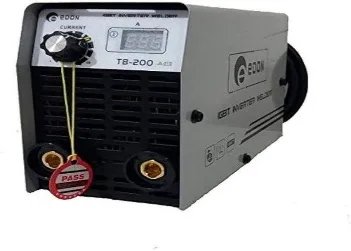
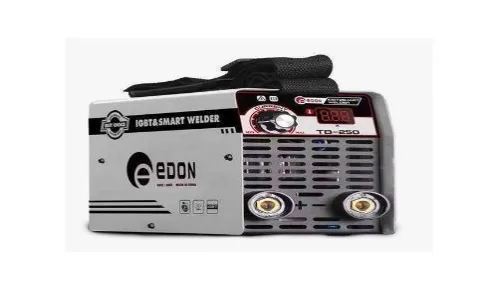
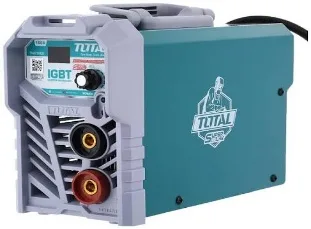
A machine with a wide adjustable amperage range, such as the INVERTER MMA WELDING MACHINE 160A, gives you flexibility to move between light repairs and heavier fabrication without switching machines. Larger units such as the WELDING MACHINE EDON 200 or WELDING MACHINE EDON 250 suit thicker plate and heavier structural sections.
Always test on scrap metal of the same thickness before starting the actual job, since the ideal amperage also depends on electrode size, joint type and welding position.
Understanding duty cycle before you buy
Duty cycle is the percentage of a ten-minute period a welding machine can run at a given amperage before it needs to cool down. A machine rated at a given duty cycle at a set amperage can only weld for that fraction of the ten minutes before its thermal protection cuts in.
Higher duty cycle machines suit production work and continuous seams on tanks or trailers. Lower duty cycle units are fine for occasional repairs, gate fabrication and site call-outs where welding is intermittent with plenty of breaks. Running a machine past its duty cycle repeatedly causes it to overheat and shut down, so check the rating before buying if your work involves long, continuous welds.
Powering a welding machine in a Kenyan workshop
Most welding machines used in small Kenyan workshops run on a 240 V, 50 Hz single-phase household or workshop supply. Voltage dips on the Kenya Power grid are common, especially on long distribution lines, and a low or unstable supply can weaken the arc, cause poor penetration, or trip an inverter machine's protection circuit.
If your premises experience frequent voltage dips, or you plan to add a dedicated welding circuit, have a qualified electrician assess your wiring, breaker rating and cable size before you begin welding. Never attempt to modify household wiring or the distribution board yourself.
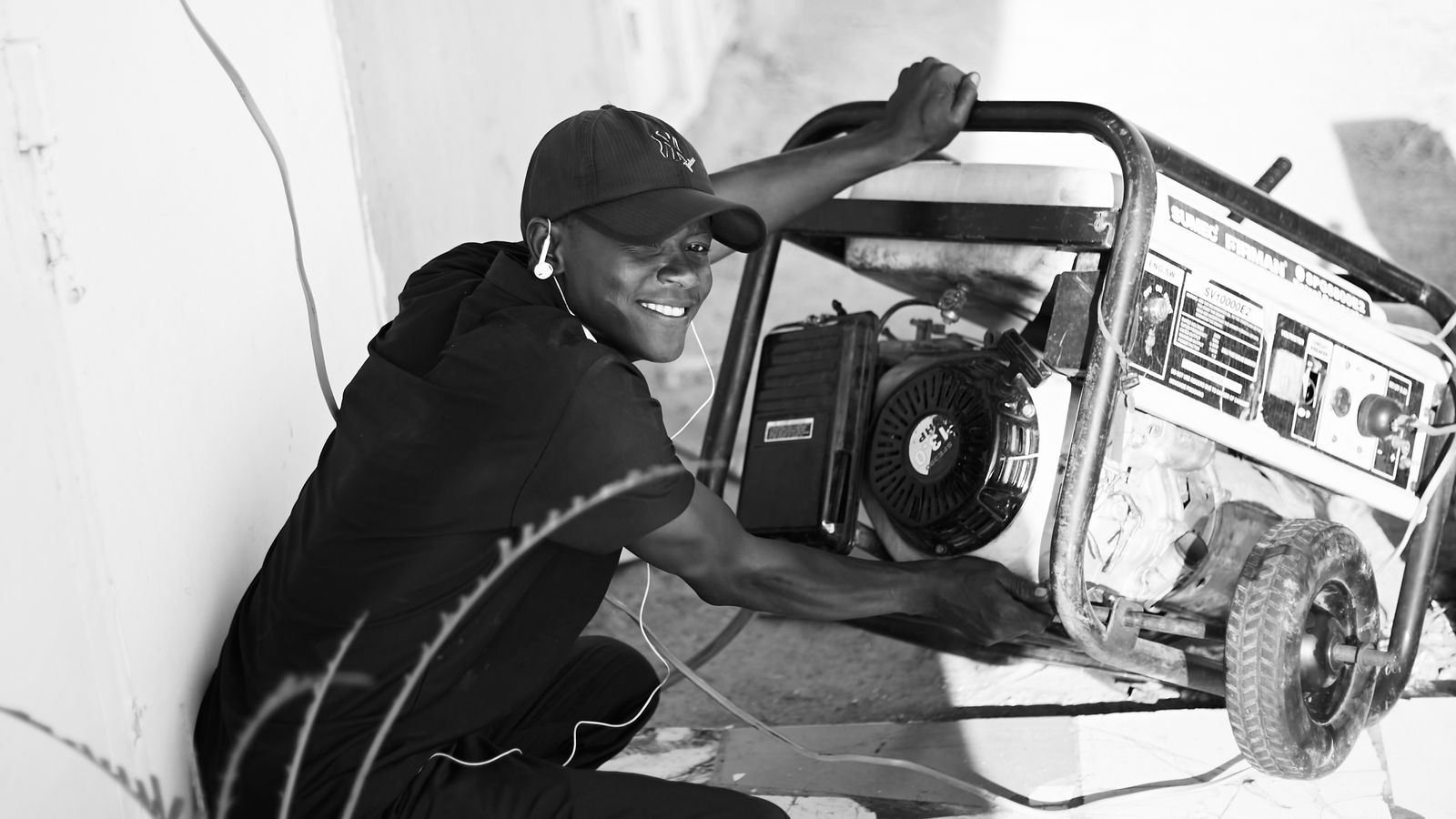
When mains power is unreliable, some fabricators run smaller inverter welding machines from a generator. This can work, but the generator must supply clean, stable power at enough capacity for the machine's rated input current, so a qualified electrician or generator technician should confirm compatibility first.
Electrode sizes and consumables
Electrode diameter should match both the machine's amperage setting and the thickness of the material. Thinner electrodes such as WELDING RODS 2.5MM suit lighter gauge steel and lower amperage settings, while thicker rods such as WELDING RODS 3.2MM suit heavier sections and higher amperage work.
Keep a range of electrode sizes on hand so you are never forced to run a thin rod at excessive amperage, which burns the coating too fast, or a thick rod at low amperage, which struggles to strike and hold a stable arc. Store electrodes in a dry place, since damp coatings cause poor arc stability and porous, weak welds.
Essential PPE for safe welding
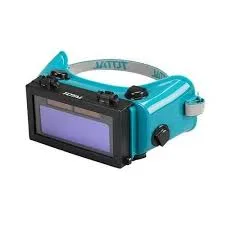
Welding produces intense ultraviolet light, sparks, molten spatter and fumes, so protective equipment is not optional. An auto-darkening mask, such as the AUTO DARKENING WELDING GOGGLE 90*35MM, shields your eyes and face from arc flash while letting you see clearly before and after striking the arc.
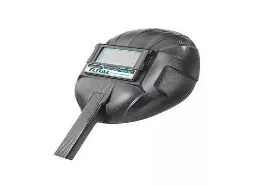
Flame-resistant gloves, a long-sleeved cotton or leather apron, closed leather boots and a well-ventilated work area protect against burns and reduce fume inhalation. Never weld near flammable materials or fuel containers. A basic mask like the TOTAL WELDING MASK is a minimum standard for any workshop, and it should be checked regularly for cracks or a damaged lens before each use.
Matching a machine to your workshop
A general jua kali fabrication workshop doing gates, grills and structural steel is usually well served by a rugged MMA inverter machine such as the WELDING MACHINE EDON 200 or WELDING MACHINE EDON 250, which cover common electrode sizes and everyday material thicknesses.
Fabricators who also need TIG capability for stainless steel or thinner aluminium work can look at a dual-process option such as the INVERTER MMA/TIG LIFT WELDING MACHINE 70V, which adds flexibility without needing two separate machines.
Whichever machine you are considering, ask ToolHub Kenya on WhatsApp for the specification sheet and price, since matching the right amperage range and duty cycle to your workload matters more than any single feature. ToolHub Kenya offers delivery across Kenya once you have decided.
Tools mentioned in this guide
Prices change with stock and supplier costs, so we quote on WhatsApp. Send us the tool and your town for today's price and availability.
Frequently asked questions
Is MMA or MIG better for a beginner fabricator in Kenya?
MMA (stick) welding is generally easier to start with because the equipment is simpler, more tolerant of rust and dirty metal, and cheaper to keep running. MIG gives faster, neater welds on clean thin sheet but needs a steadier power supply and more consumables, so many beginners learn MMA first before adding MIG.
What amperage do I need to weld thick steel plate?
Thicker plate generally needs a higher amperage setting than thin sheet metal, often near the top of a typical inverter MMA machine's range. The exact setting also depends on electrode size and joint design, so always test on a scrap piece of the same thickness before starting the real job.
Can I run my welding machine from a generator?
Many inverter welding machines can run from a generator if it supplies clean, stable power with enough capacity for the machine's rated input current. Confirm compatibility with a qualified electrician or generator technician first, since an undersized or unstable generator can damage the machine or produce poor welds.
What causes my welding machine to cut out during long jobs?
This is usually the machine reaching its duty cycle limit and activating thermal protection to prevent overheating. Let the machine cool as instructed, then resume at the same or a lower amperage, or consider a machine with a higher duty cycle if you regularly do continuous production welding.
Should I worry about KPLC voltage dips when welding?
Yes, voltage dips can weaken the arc and affect weld quality, especially on long distribution lines. If dips are frequent at your premises, ask a qualified electrician to assess your supply and wiring, since they can advise whether a stabiliser or a dedicated circuit fits your situation.
What basic PPE do I need before I start welding?
At minimum you need an auto-darkening or standard welding mask to protect your eyes and face, flame-resistant gloves, a protective apron, closed leather boots and a well-ventilated work area. This basic kit guards against arc flash, sparks, spatter and fume inhalation.